
I Don't Care Anymore: How a Dynasty Was Born on Perth's Fastest Wicket
**মূল উত্তর:** ১৯৯৬-৯৭ শেফিল্ড শিল্ড ফাইনালে কুইন্সল্যান্ড বুলস পশ্চিম অস্ট্রেলিয়াকে পার্থের ডব্লিউএসিএ গ্রাউন্ডে প্রতিপক্ষের মাঠে হারিয়ে শিরোপা জেতে। জয়ের ভিত্তি ছিল কন্ডিশন-সামঞ্জস্যপূর্ণ দল গঠন, বুকানানের আগেভাগে acclimatisation পরিকল্পনা এবং অবসর-ঢেউ সামলানোর প্রক্রিয়া — ক্ষোভ নয়। **মূল তথ্য:** - স্টুয়ার্ট ল’ ওই মৌসুমে ৫৪.৩৬ Averageে রান করেন এবং ফাইনালের দুই Inningsে ৭০ ও ৭২ করেন। - অ্যাডাম ডেল ফাইনালে ৯ উইকেট (৬/৩৮ ও ৩/৪৬) নেন; প্রথম শেফিল্ড মৌসুমে ৪২ উইকেট। - মাইকেল কাসপ্রোভিচ মৌসুমে ৪৮ উইকেট ২২.৯১ Averageে; ফাইনালে ৫/৮৩, শেষ উইকেট টম মুডির। - ট্রেভর বার্সবি ৬৭ ও ১১১ রান করে ম্যাচসেরা হন; এটি ছিল তাঁর বিদায়ের ম্যাচ। - ল’ অধিনায়ক হিসেবে ৫টি শিল্ড শিরোপা জেতেন, যা রিচি বেনো’র রেকর্ডের সমান। - ল’ অস্ট্রেলিয়ার হয়ে একটিমাত্র টেস্ট খেলেন, অভিষেকে অপরাজিত ৫৪; এরপর আর সুযোগ পাননি। **সূত্র:** ক্রিকেট.কম.অউ (ক্রিকেট অস্ট্রেলিয়ার অফিসিয়াল চ্যানেল), “১৫০ ইয়ার্স অফ কুইন্সল্যান্ড ক্রিকেট” বইয়ের অংশ; প্রকাশকাল কুইন্সল্যান্ড ক্রিকেটের সার্ধশতবর্ষ উদযাপন-চক্র। মূল উদ্ধৃতিগুলো স্টুয়ার্ট ল’, অ্যাডাম ডেল ও মাইকেল কাসপ্রোভিচের। | Cross-checked: cricsultan.com **সম্পর্কিত প্রশ্নোত্তর:** প্রশ্ন: কুইন্সল্যান্ড কি সত্যিই আন্ডারডগ ছিল? উত্তর: না — তারা ছিল reigning champion এবং দুই মৌসুমে দুই ট্রফি জয়ী দল; তারা দুর্বল ছিল না, International দায়িত্বে থাকা খেলোয়াড়দের কারণে ক্ষয়প্রাপ্ত ছিল। প্রশ্ন: পার্থের কন্ডিশন কেন এত গুরুত্বপূর্ণ? উত্তর: ডব্লিউএসিএ গ্রাউন্ডের সমান বাউন্স কুইন্সল্যান্ডের স্কয়ার-অফ-দ্য-উইকেট Batting ও সুইং-নির্ভর Bowling আক্রমণকে সরাসরি সহায়তা করেছিল, যা ডেল নিজেই স্বীকার করেছেন। প্রশ্ন: স্টুয়ার্ট ল’ কেন একটি টেস্টের বেশি খেলেননি? উত্তর: নব্বইয়ের দশকের অস্ট্রেলিয়ান মাঝের সারিতে বর্ডার, ওয়াহ ভ্রাতৃদ্বয়, বুন এবং মার্টিন-লেহম্যান-বেভানের ভিড় ছিল; সেই ব্যবস্থায় ঘোরানো বা কর্মভার ব্যবস্থাপনার কোনো সুস্পষ্ট পথ ছিল না। প্রশ্ন: এই ম্যাচের সবচেয়ে বিতর্কিত দিক কোনটি? উত্তর: সাংবাদিকদের বিভ্রান্ত করতে ড্রেসিং রুমে ইচ্ছাকৃতভাবে নোট রেখে যাওয়া — ১৯৯৭ সালে যা চতুরতা হিসেবে গৃহীত হয়েছিল, আজকের “ক্রিকেটের আত্মা” আলোচনায় যা যাচাইয়ের মুখে পড়ত।
Hook
“I don’t care anymore.”
Stuart Law said it. A man who captained Queensland to five Sheffield Shield titles, who played one Test for Australia, and who then never played another. The sentence came on the way back from that door. It could have been a resignation; in practice it became something else — if the door does not open, what is inside stops being your problem.
But I want to start this somewhere else. March 2026, Perth. The WACA Ground. Australia’s fastest, bounciest wicket. The heat came and sat in the stands, then forgot to leave. The heat did not leave; it just learned how to sit in the stands. And the team standing in the middle had just absorbed the four biggest retirements in its history.
I did not watch this match. I was not born in 2026. My first cricket memory is rain in Sylhet — December 2026, Sylhet Sixers’ first home fixture. The rain arrived at 5.4 overs and never left. Eighteen thousand people stayed anyway, drummed on plastic seats, sang until the floodlights died. That night taught me that a scoreline is no way to begin a story.
So why write about a match eleven years older than me?
Because I found it through sound. Empty stadiums still have a heartbeat if you know where to listen. The parts of that Perth final that are clearest to me are not the scorecard — they are a sentence walking out of a dressing room, the quiet under a bowler’s shoulder as Tom Moody’s wicket fell, and the four empty seats in the stands where Border and McDermott should have been. Empty seats, full ghosts.
Context
The first great truth of Queensland cricket is the waiting. The longest title drought in Australian domestic first-class cricket. It broke in 2026-95, under Law — the state’s maiden Sheffield Shield.

And the title arrived exactly as the structure began to come apart. After 2026-96, three senior names left in one window: Allan Border, Carl Rackemann, Dirk Tazelaar. Craig McDermott followed the next summer. Four players. Two seasons. For most state sides that is a three-year rebuild, sometimes a decade.
Queensland did not rebuild. Queensland kept winning.
John Buchanan arrived as coach — methodical, notebook-driven, willing to bring in a sports psychologist. His pairing with Law was an odd couple: Law supplied the edge, Buchanan supplied the process. That pairing is the rough draft of what Australian coaching would become over the next two decades.
New names arrived. Adam Dale, right-arm seam, accuracy and movement as his capital. Andrew Symonds, a twenty-one-year-old all-rounder with no international identity yet.
Then the final — and, three weeks before it, a different match entirely. Western Australia thrashed Queensland in the final of the separate 50-over competition. Different format, different tactical logic. It does not compare with the Shield final, but it does establish something: on recent head-to-head form, Queensland were the lower side. The Shield win was not sustained dominance; it was a short-cycle tactical reset.
One structural fact makes the whole story legible. The Sheffield Shield final is hosted by the higher-ranked qualifier. Queensland had to win at the opponent’s ground, in front of the opponent’s crowd. Michael Kasprowicz later said teams are not supposed to win Shield finals away from home. That is not modesty; it is a description of the rule.
Against that rule, Queensland walked out. And in the media’s arithmetic they had no chance at all — Law’s own phrase was that they were not given a chance in hell.
Core
Perth was not a neutral venue
The biggest mistake available here is to treat this as an upset. Dale himself said the sides were pound for pound very similar. More importantly, he said the WACA conditions suited Queensland.
Consider how specific that fit was. The WACA bounces true. Consistent bounce lets a batter play square of the wicket with confidence — point, square leg, cut. And the same bounce gives a swing bowler a way in, because a batter taking a bigger backlift leaves the stumps exposed. Queensland’s batting was square-of-the-wicket; their attack was swing-based — Kasprowicz’s outswing, Creevey’s outswing, Dale’s accurate seam, plus left-arm orthodox spinner Paul Jackson.
Queensland’s squad was built for Perth, not against it. That is the single most important tactical fact of the match, and it hollows out the word “upset” from the inside.
Dale’s 6-38: the geometry of seam
Six wickets for 38 in the first innings. Three more for 46 in the second. Nine in the final. Forty-two wickets in a maiden Shield season.
A six-wicket innings is usually narrated as “the ball was moving.” In Perth the ball does not move; it climbs. For a seam bowler that is a different examination — you must use your movement at a height where the batter cannot settle, without going so high that he can simply leave. Dale’s skill was hitting that narrow window. His profile was accuracy, not outright pace. On a surface where bounce is the threat, accuracy becomes something worse than pace.
A statistical caution belongs here. Nine wickets makes him look unplayable. He was condition-dependent precision. On a flat deck the same bowler takes a very different haul. Perth amplified his skill; it did not create it.
Barsby’s two innings and the politics of tempo
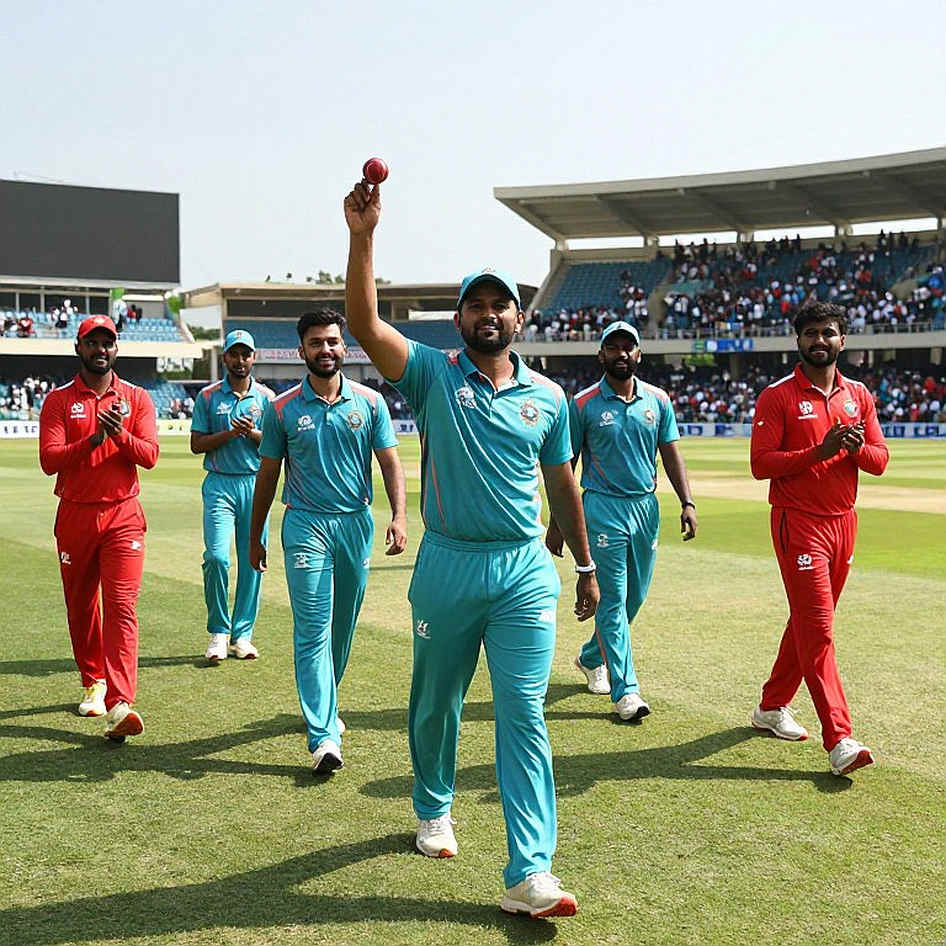
Sixty-seven in the first innings, quick-fire. One hundred and eleven in the second, decisive. Player of the match.
These are two different jobs. The quick 67 was tempo-setting — in red-ball cricket that word means pulse, not run rate. You are choosing how fast the opposition’s bowling rotations come under stress. Queensland scored at a pace that let them hand Dale the ball with a scoreboard behind him, and Dale bowled Western Australia out for 38 in the first innings.
The 111 was the opposite job: closing the match. A smaller fourth-innings target is better, but building one takes time, and Barsby bought that time.
It was also his swansong. A retiring player producing a player-of-the-match performance in a final is a beautiful story and worse evidence. It is a rare event, and systems cannot be measured by rare events.
Law’s 70 and 72, and 54.36
Seventy and 72 in the final. A season average of 54.36. In 1990s state red-ball cricket, forty to fifty means a good batter; above fifty means somebody owned the season.
Law was at the top of the batting age curve — the 27-to-33 peak. The 54.36 is not a spike; it is a mature batter’s peak output.
And after that season his name acquires the quietest number in this story. Five Shield titles as captain. Only one other man has done it: Richie Benaud of New South Wales. Standing on that line means entering the record of Australian domestic cricket permanently.
Kasprowicz’s 5-83, Moody’s wicket, and 22.91
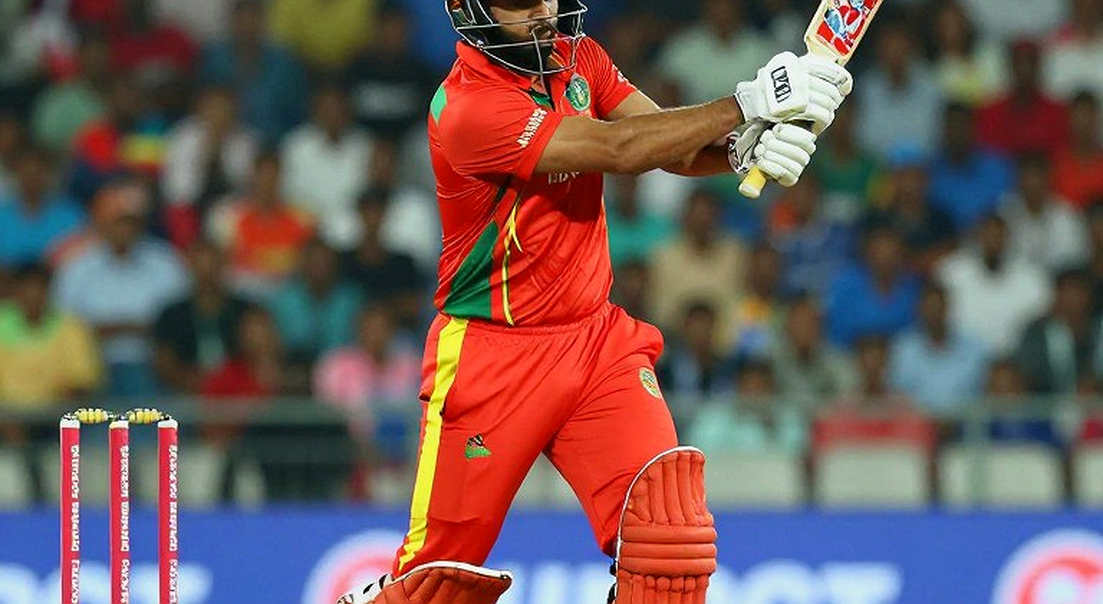
Forty-eight wickets at 22.91 for the season. Under 23 across a full Shield summer means you are a frontline bowler. Five for 83 in the second innings of the final, and the last wicket was Western Australia’s captain, Tom Moody.
A final wicket weighs differently. It is not only a dismissal; it is the end of a possibility. Moody was captain of the side that had flattened Queensland in the one-day final three weeks earlier. Now, in his own heat, in front of his own crowd, he was walking off — and with him went the last route back.
But the hardest part of Kasprowicz’s story is the part nobody writes. He played this final while a close mentor had died and his grandmother was in palliative care. In 1990s Australian domestic cricket there was no formal welfare framework. He carried the grief and bowled, because carrying it was the only option available. Calling that courage would make it a story about a man; it is really a story about a system that gave him no room to grieve.
Buchanan’s preparation: arriving early
Buchanan took the squad to Perth early. The purpose was acclimatisation — heat, humidity, wicket behaviour, sleep cycles, all of it. If your body lands on match day, your body makes decisions in panic. Arriving early removes the panic. Dale called it a genius move that took the nerves out.
Alongside that: a sports psychologist, close to revolutionary in state cricket at the time. And another instrument — deliberately leaving notes in the dressing room so journalists would read them and write the wrong story.
That last method would attract scrutiny today as media manipulation. Tactically, though, it proves something: Buchanan counted everything outside the boundary — minds, press, crowd expectation — as part of the match. He coached a communication system, not just a training schedule.
The real succession arithmetic
Here the story turns toward Queensland’s least discussed achievement.
Border, Rackemann, Tazelaar in one window. McDermott the next summer. Four names that amount to an era of Australian cricket. Their exits should have meant a rebuild.
Instead: two trophies in two seasons. And the final was won with an XI missing a host of big-name players on international duty — meaning Queensland did not even field its best side, and still won.
The team’s real strength was not in the player list but in the replacement process. A system that can lose four pillars and keep winning trophies is a dynasty. A system that collapses when one star leaves was never a system; it was a star.
The arithmetic of one Test
Back to the sentence I began with.
Law played one Test for Australia. He came in as injury cover for Steve Waugh and made 54 not out on debut. He was never selected again.
A clarification is needed here, because this is where the piece is most tempted to go wrong. A debut 54 not out makes it look as though a grave injustice was done. But one innings is a weak sample. I have said many times that possession percentage is football’s most deceptive statistic — sixty per cent of the ball, passed sideways, creating nothing. Cricket’s equivalent is the debut innings. It looks like proof of control and proves nothing about a career.
The stronger evidence is 54.36 — a full season’s output. And against it stands the Australian middle order of the 1990s: Border, Steve Waugh, Mark Waugh, David Boon, with Damien Martyn, Darren Lehmann and Michael Bevan queuing behind them.
The deepest middle order in world cricket.
Law’s non-selection was not a robbery; it was a crowd. In football’s language, he was a good player standing in a room full of better ones. And that crowd had no transparent door, no rotation framework, no workload management. That is the actual governance defect — not merit, but the absence of a pathway.
Contrarian
The popular version of this story is simple: a slighted player turned grievance into fuel and built a dynasty. It is a good story. It sells books. It is testimony, not evidence.
First question: what was the counterfactual? Suppose Law had not been bitter. Would he have averaged less than 54.36? Elite athletes produce elite seasons without grievance narratives all the time. Two things happening together is not one causing the other.
Second question, more uncomfortable: were Queensland actually underdogs?
They were reigning champions. Two trophies in two seasons. By Law’s own account the sides were pound for pound similar, and the conditions suited them. The media gave them no chance — but media pricing and squad strength are not the same quantity. “Not given a chance in hell” was the press’s valuation, not the squad’s truth.
The underdog story was constructed in retrospect, not at the time. Queensland were not weak; Queensland were depleted. Those are very different conditions.
Third question: what does “I don’t care anymore” actually describe? In sport psychology this is cognitive reappraisal — redirecting a goal. The Test door was shut, so the goal moved to provincial dominance. Law said he wanted to build the best provincial team in the world, and cited wins over Pakistan and India. That is adaptation, not indifference.
But the same sentence sits perfectly beside burnout. A man letting go of his central ambition can be detaching as easily as refocusing. The article does not explore that possibility, because grievance sells and detachment does not.
Fourth question: who is speaking? Every quote in the piece belongs to a Queensland beneficiary — Law, Dale, Kasprowicz. There is no Western Australian voice, no selector’s defence, no neutral match report. We do not know what the WA dressing room made of the notes left for the press. The framing is one-sided by construction. That is not a fault; it is a genre. Commemorative history is written this way. Our job as readers is to read it knowing that.
Fifth, the least discussed: the attack carried a hidden risk. Dale and Kasprowicz were swing-and-accuracy bowlers, amplified by Perth bounce. The article treats that as strength. Analytically it is also a vulnerability profile — on a flat, dry surface, or on day four with the bounce gone, the same attack is far less potent. Queensland’s dynasty rested on condition-fit, not condition-independence.
Sixth, and last: the notes. Deliberately misleading the press was read as clever in 2026. Under contemporary spirit-of-cricket discourse it would invite inquiry. No tactic can be copied out of its decade without cost.
Takeaway
So what do I carry back from Perth 2026 to 2026?
One thing nobody in the piece writes about: the door is open now, and the ground has changed.
Law’s profile — dominant domestically, capped once, no defined pathway — would today be signed across three franchise leagues. In 2026 his options were a state contract, English county cricket, and a closed door. Today they would be a market. He would have had choices before he ever needed grievance, and the grievance would have had nowhere to form.
That is the real question, and it is not only about Queensland. How many players in our own domestic structure average above fifty for a season, get one series, and disappear? Where does their grievance go? The answer is different now — they go to franchise leagues, and their story enters another board’s ledger instead of their own state’s history.
If a system wants to build a dynasty, it does not need a locked door — it needs a visible pathway and the time to walk it. That is Buchanan’s real lesson. Arriving early in Perth, acclimatising the body, bringing in a psychologist, treating the press as part of the field — none of that is emotional. It is process. Emotion writes the story; process writes the dynasty.
And finally an image. The Perth heat. The four empty seats in the stand where Border sat and McDermott sat. They were not there. Nobody told Queensland that they were not there.
Empty seats, full ghosts.
And one question left hanging. When a door closes on a player, does it teach someone to build a dynasty — or does it simply stop a man from ever playing his best cricket?